

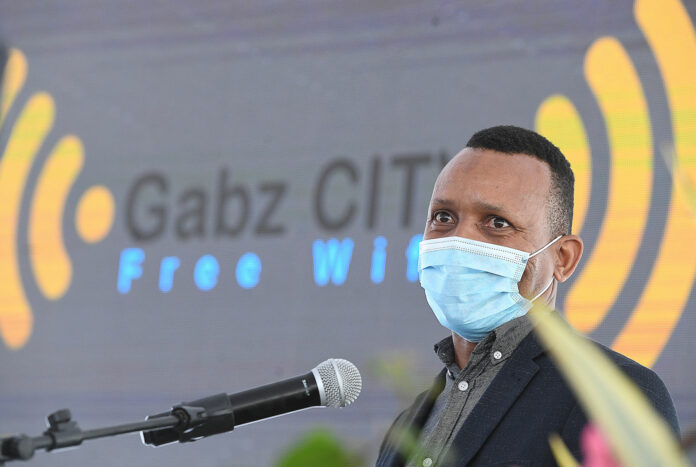
At least until they are promoted to the front bench, a good number of Botswana Democratic Party backbenchers have been known to drop pearls of wisdom that they typically leave at the door of the cabinet room upon promotion. Still a safe distance from the frontbench and able to exercise his freedom of speech, Gaborone Central MP, Tumisang Healy, dropped such wisdom on the last day of the budget-speech session.
In his last word to parliament, the Minister for Presidential Affairs, Governance and Public Administration, Kabo Morwaeng, cautioned MPs against the use of insulting language, especially as it relates to the president. As other BDP MPs, Healy ignored valid points being made by the opposition MPs that Masisi himself used insulting language on members of the public and opposition politicians. However, Healy did make a valid general point about a new tendency that has never been part of Botswana’s politics.
“We are breeding militancy among our people,” he said adding that even outside parliament, inexplicable “hostility” is taking hold. “We are starting to hate each other.”
Healy would have grown up in a period of time when the last 30 or so minutes of an open-air political rally (“freedom square”) was devoted to fielding questions from members of opposing political parties. This might also sound like fiction but in President Sir Ketumile Masire and Festus Mogae’s Botswana, it was customary for a member of an opposing party to occasionally say a closing prayer at the end of the rally. It is unclear whether the disappearance of these courtesies during President Ian Khama’s administration was mere coincidence or whether he was the catalyst. What is certain though is that Khama played no small part in the coarsening of political discourse of freedom squares.
Alongside the BDP’s national campaign manager for the 2014 general election, Alec Seametso, he notoriously insulted the Umbrella for Democratic Change candidate, Kgosi Tawana II, at a BDP rally in Maun. It was a quite revealing moment because Khama had always been gentlemanly in his conduct of freedom square politics. On becoming president in 2008, Khama introduced a malevolent spy agency that in one respect, became the intelligence wing of the BDP and targeted people who made the mildest of criticism against him.
Today, merely showing up at the rally of an opposing party in attire that marks you out as a political opponent and would be tantamount to suicidal bravery. A former BDP activist traces the discontinuation of freedom-square courtesies to a particular incident at a BDP rally in Gaborone during Khama’s second term. At the end of the rally, an opposition activist was called upon to say the closing prayer. In a moment filled with blasphemous evil, the opposition activist asked God to strike BDP members dead. Naturally, that led to the BDP stopping the extension of those courtesies, first in Gaborone and then across the country. The opposition returned the favour and since then, a rally is never contaminated with members of the opposing side.
In Masire and Mogae’s Botswana (and we believe in Sir Seretse Khama’s as well), a branded Botswana Democratic Party vehicle carrying members fully decked out in party members would pull up at a Botswana National Front rally and nothing ever looked out of place with this. Today that would be seen as provocation – was in fact seen that way when a branded BDP campaign vehicle stopped off at a UDC rally in Gaborone in December last year. The situation would have escalated beyond exchange of verbal to physical missiles had the BDP “invaders” hung around for much longer.
MPs are certainly culpable in the coarsening of Botswana’s political discourse and a BDP MP (Tumiso Rakgare, Mogoditshane) has gone farther to suggest that students’ indiscipline may be a result of gross misbehaviour by some MPs. One such example, which Healy quoted, was of opposition MPs invading the Speaker’s chamber because they didn’t agree with a ruling he had made. The cameras focused on what was happening in the chamber but Healy claimed that the same group of MPs had also invaded his own office at the Parliament Annexe, ripping out his Zoom connection to deny him an opportunity to speak.
In the Botswana of Masire and Mogae, those eager to demonstrate knowledge of politics took the trouble to familiarise themselves with relevant political issues. The BNF had an informal political education programme (“dithuto”) through which party members were drilled in the ideology that the party espoused. Today that education has been replaced with Facebook memes – which only engenders ignorance.
Botswana has never been a nation of deep readers and social media has aggravated this problem. On Facebook, a 200-word article with very useful information is derided as a “book” and some subscribers are in the habit of tagging friends and asking them to read and summarise article for them. Needless to say, people who do this, pass up an opportunity to train their minds in the rigours of logical thought. Despite these obvious shortcomings, some of those people want to dominate political discussions and where they are confronted with knowledge, become either verbally or physically violent. This is not surprising because ignorance begets violence. In that regard, lack of interest in knowledge is making Batswana violent – or “militant” as Healy would say.
Lately, a toxic viewpoint has congealed in some “future leaders”, especially those who identify with the opposition, that botho is useless and is being used by the BDP to mask its incompetence. Insulting others, especially the elderly, is somehow supposed to make them more competent and produce good results. This is the mindset that prompted a rapper to hurl a lavatorial insult at everyone in Botswana and reproductive-organ insults at political leaders. To accusations that this rapper is being egregiously disrespectful of elders, his defenders say that botho has taken us nowhere, is not creating jobs, not patching up bad road and not reducing queues at hospitals.
The problem with violent language though is that it leads to physical violence. Tragically, some opposition leaders, including UDC president, Duma Boko, have started calling for the shedding of blood in pursuit of political goals in explicit terms. The most recent call was made by the Botswana People’s Party president, Motlatsi Molapisi, at a UDC rally. Many years ago when the Society for the Promotion of Ikalanga Language clashed with Pitso ya Batswana, a member of the House of Chiefs called Tapson Jackalas dropped knowledge that hasn’t lost its validity: that when Botswana catches fire, the people who set the fire in the first will relocate to western capitals with their families.

