

Crime suspects are forced to submit DNA samples to the police. Prisons are packed like slave ships as repeat offenders are cleared off the streets. This is not a description of the Soviet Gulags, but an impression of what Botswana may look like should the proposed Forensic Procedures Bill pass through parliament.
The nightmare continues: The Botswana Police Force does have the tools and skills to cast their nets wider and farther in criminal investigation through DNA profiling. Needless to say, the outcomes of criminal investigations are more pleasing, advanced and scientifically driven more than they were a decade ago.
The conceived legislation is needed to buttress the Criminal Evidence and Procedures’ Act. Although the Police have been using DNA profiling in their investigations since 2004, DNA specific law has been absent.
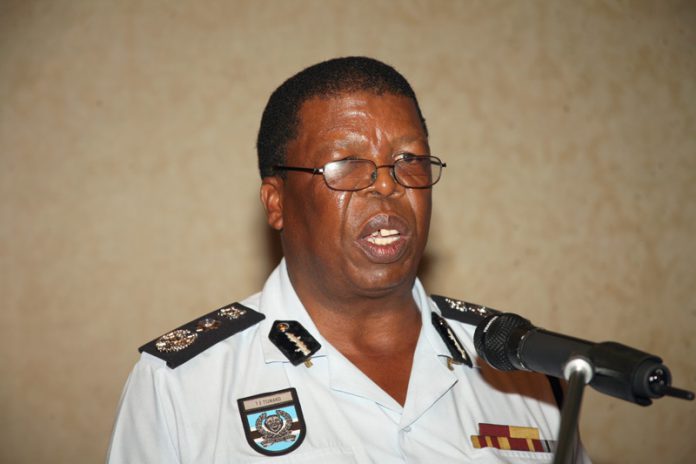
“We currently use the Criminal Evidence and Procedures’ Act, which is the mother-law for all criminal cases, and it is carrying the aspect for DNA evidence just fine. But we have realized that we need additional legislation because the Criminal Evidence and Procedures’ Act has loopholes,” explained Deputy Director of the Botswana Police Forensic Science Services, Assistant Commissioner Anthony Wally.
The weakness that Asst. Comm. Wally is referring to is that the police cannot force a suspect to provide a DNA sample if he or she does not want to do so.
The Botswana Police acquired DNA analysis machinery in 2004 and the American government’s Federal Bureau of Investigation (FBI) donated the Combined DNA Index System (CODIS) to them in 2005.
Wally said the proposed legislation has been submitted for drafting at the Attorney General Chambers.
The two major aspects of the proposed Forensic Procedures Bill are that the police would like suspects in criminal investigations for offenses that require DNA evidence to be required to provide samples for analysis and for the police to be empowered to also collect and keep samples from all persons convicted for serious crimes.
Serious crimes are those offenses carrying penalties of 12 months’ imprisonment and above.
“Looking at our population and the rate of crime, it’s plain to see that crime is disproportionately high. We do believe that there is a lot of repeat offending, especially in sexual assault cases happening in urban areas and large villages. We would like to be allowed to cross-check convicted persons’ DNA against any unsolved crime through profiles in our database.
Assistant Commissioner Wally put the figure of profiles of suspects who were investigated for various crimes in the DNA database at currently about 3000 since 2005.
A local attorney, who requested anonymity, said the proposed law was sure to sail through parliament when the time came.
“A piece of legislation seeking to such as this one would have no problem at our parliament because legislators are likely to see it as a fine specimen of law that will rid this country of criminals. This stems from the fact that our legislators lack expertise in many aspects of the law. However, I foresee a situation where defence attorneys will challenge the constitutionality of such a law,” he said.
To illustrate his point of contention, the attorney calls attention to the anti drunken-driving laws that required motorists to submit to breathalyzer tests a few years ago. He said the law was changed because people were simply refusing to do the tests.
“We have a very liberal constitution which balances things out. In one hand it says the police can gather evidence such as blood tests to check alcohol levels to prove drunken driving, but at the same time it says a person cannot self incriminate. If you submit to a breathalyzer test, you are incriminating yourself. Suspects are innocent till proven guilty. In the same sense, the proposed DNA law might encounter problems because the same constitution says public interest is more important than individual will and also says everyone has a right to silence and no one can be forced to self-incriminate.”
One of the Botswana Police Service’s finer moments since adopting DNA profiling to solve crime was in the case of the Kanye serial Killer, Oreeditse Mokoti , in 2009.
“We began that matter investigating only one murder. In the end, we successfully linked him to four of the nine cases,” Wally said. Further, he said the police have since provided DNA evidence for thousands of cases since 2005.
If things pan out the way the police wish, the DNA data base will have the criminal and civil categories. Under the criminal side, there will be separate files for suspects, convicted persons and general crime scene index. Under the civil categories, profile information relating to unknown deceased person, volunteers and missing persons will be created.
Asst. Comm. Wally explained that having the civil category in the database would help in times of disasters, and to help him missing people and for elimination purposes.
“We have actually used DNA profiling on civil issues for identification purposes where there were mass deaths and mangled body parts,” Wally said.
Asked whether people who provided DNA samples under the civil purposes category would not be putting their heads on the block, Wally maintained that there would be a stern provision against officers who cross checked profiles of people in the civil category with criminal issues. He said it then became an ethical issue and that any person who broke the law would be committing a criminal offence that carried heavy fines.
“We took a professional oath and are also bound by the Police Act. The proposed bill address issues of disclosure of information, authorization to accessing the database and other ethical issues,” he said.
Answering a question on how far back the police would go to re-investigate criminal offenses, Wally said although most criminal offenses may lapse after 20 years, the same cannot be said of a heinous one such as murder. Decades old unsolved murders can be re-visited no matter how long ago they occurred. Even crimes that were not processed due to outdated methods can be re-visited.
One of the biggest challenges that the Botswana Police’s arm of the Forensic Science Services currently faces, according to Wally, is that the courts DNA evidence to be so compelling and overwhelming that they always insists on it as part of their evidence.
“This has created a huge backlog because we have serious human resource and equipment constraints. We’ve now resorted to appealing to courts to only bring cases that truly need DNA analysis to us. For other cases, the can use other evidence such as testimonies etc,” he said.
The Botswana Police Service has only four Forensic Scientists who are experts in DNA analysis. There are three other biologists who still need to be trained further in forensic science.
“The cost of training is very high as it is done abroad, so only a limited number can be trained at a given time. There are various other technical areas within the Forensic Science Services branch that are in adequately resourced and trained hence the slow uptake in training on DNA analysis. We have experienced a very high attrition rate of highly qualified scientists in the past hence the low numbers of available experts,” Wally said about resource constraints face the police service.

