

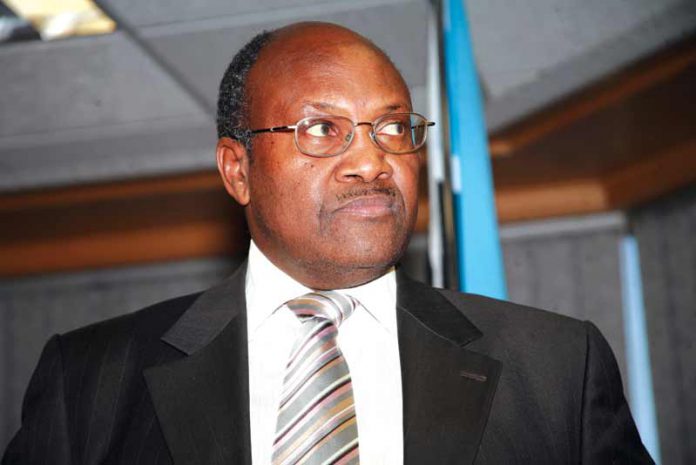
As SADC member states press ahead with the establishment of the SADC Customs Union, Secretary for Economic and Financial Affairs, Dr Taufila Nyamadzabo, said the union would provide member states, including Botswana with greater negotiating power in multilateral and regional trade negotiations.
Botswana is currently a member of the Southern African Customs Union (SACU) which last year celebrated 100 years of existence.
Compared to a Free Trade Area, a customs union is a deeper form of economic integration in which members establish a common customs union area entailing the elimination of all barriers to trade among themselves and free from internal customs duties as well as the application of a Common External Tariff (CET) on imports from third parties or non-members.
“Botswana will therefore benefit from a SADC Customs Union as investors located in this country will be able to take advantage of an enlarged and integrated regional market,” said Nyamadzabo.
He added that this would be complemented by increased cooperation in the development of regional infrastructure, macro-economic stability and harmonized trade facilitation policies which have the potential of raising required growth and economic development.
Some of the expected gains through the application of CET include a reduction in production from economies of scale, improved efficiency and increased competitiveness of regional firms.
“A SADC Customs Union would also provide members states, including Botswana with greater
negotiating power in multilateral and regional trade negotiations,” said Nyamadzabo.
In his 2011 budget speech, the Minister of Finance and Development Planning Kenneth Matambo said the establishment of the SADC Customs was targeted for last year as per the SADC Regional Indicative Strategic Plan Development Plan.
“While the target date of 2010 could not be achieved, all member states remain committed to establishing a SADC Customs Union. They have also agreed that the principle of variable geometry would be applied because of the divergence in economic conditions of member states. This would entail each member state joining the SDAC Customs Union when it reaches the required state of readiness determined on the basis of agreed levels of tariffs against third parties”, said the minister.
He said a high level expert group comprising of representatives from ministries responsible for trade and finance from member states has been formed to work out modalities for SADC Customs Union and report to the Council of Ministers before the end of 2011.
Meanwhile, Nyamadzabo has said there was no delay in concluding the SACU revenue sharing formula as the consultancy by the Australian company (Centre of International Economics) only started in November for a period of three months.
The consultants have already submitted a preliminary report which was discussed by senior officials on 21st January 2011 and were expected to conclude their report at the end of last month.
“Once the final report is submitted to the SACU Commission and Council of Ministers in April 2011, the process of negotiating the version of the formula will commence up to a period when all member states agree,” said Nyamadzabo.

