

First things first. It is a good thing that Botswana has voluntarily become South Africa’s cultural colony because a life-and-death issue is finally getting the attention it deserves. Fanaticism about Orlando Pirates and Kaizer Chiefs has inspired enough young boys to end up playing for the national football team. In the Botswana of the past, Batswana who worked in South African mines introduced their respective communities to Fanagaloo, the lingua franca of the South African mining industry.
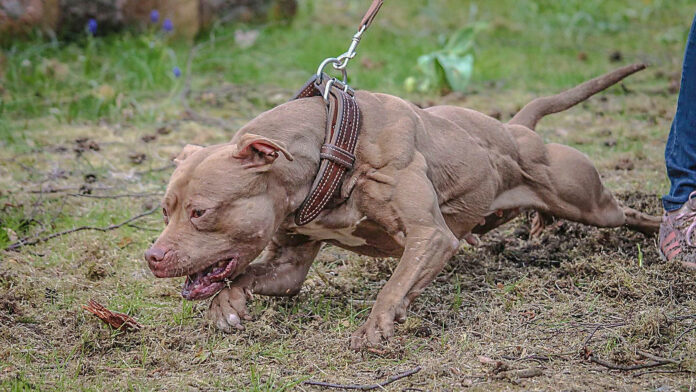
Thus Fanagaloo came to enjoy linguistic prestige almost equal to that of English. Fanagaloo has been replaced by Tsotsitaal, a mixed language whose ever-evolving vocabulary is developed in the streets of the Gauteng Province. Were it not for South African-origin cultural phrases, some (especially) young Batswana would be practically mute. In the latest development, a fierce campaign is underway in South Africa to have pitbulls banned. This follows an incident in which two pitbulls, trusted family pets, mauled a 10-year old boy to death. In a campaign led by Juby Peacock, a former Miss Botswana, Batswana have joined the bandwagon and are also calling for the banning of the pitbull breed.
Interestingly or tellingly, when a pitbull mauled a Mahalapye man to death in Mogoditshane early last year and the local press (Sunday Standard included) gave this issue extensive coverage, there wasn’t enough outrage to launch similar campaign. Odder still, the issue has raised heckles in parliament – which it didn’t when there was press reportage to the effect that MPs are silent about issues that affect everyday people. A May 8, 2022 article in Sunday Standard titled “Troubling Issues MPs Never Discuss in Parliament” stated in part: “The Mogoditshane death happened before the budget session of Parliament started and while this session was in progress, there were news reports of another pit bull mauling, this one involving a child.
Not one MP raised the issue of dangerous dogs – or the need to develop appropriate legislation to protect members of the public.” For what it is worth, the Sefhare-Ramokgonami MP, Dr. Kesitegile Gobotswang, has spoken about this issue in parliament. At least to our knowledge, this is the first time in the history of Botswana and after many pitbull-occasioned deaths that this issue has reached parliament. Indications are that a majority of people would favour a ban on the rearing of pitbulls. This is basically a numbers game because this breed is owned by very few, mostly rich people.
It is understandable why the rich would lose this vote. The poor are at greater risk of being mauled by dangerous dogs let loose and when it comes to voting, they outnumber the rich many times over. What has been most interesting about this debate is that a greater portion of the blame has been placed on the dogs and not the real culprits – the owners. Some of the most dangerously irresponsible people in society are dog keepers. In the case of Botswana, these people are even more so because of weak laws that are loosely enforced – if at all. To be clear, there are responsible dog owners who go above and beyond what the law requires to keep both their dogs and members of the public safe.
These owners are highly knowledgeable about the dogs they keep and can do so for years on end without any untoward incident occurring. Dangerously irresponsible owners, a good number of them status-conscious nouveau riche, know next to nothing about dogs, don’t really love them but think that ownership of exotic breeds marks their socio-economic standing. Some would have acquired the dogs as part of a conspicuous consumption shopping spree that included purchase of edible flowers and seaweed from Woolworth’s Foods. Legislative focus on this issue would be most welcome because Botswana still uses outdated colonial-era law that the home government has demonstrated no appetite to update.
If a court of law determines negligence on the dog owner’s part to be the reason for a mauling, the dog owner would serve only four months in prison. Section 239 of the Penal Code criminalises “reckless and negligent acts.” One of those acts is criminally irresponsible pet-keeping about which the Act says the following: “Any person who in a manner so rash or negligent as to endanger human life or to be likely to cause harm to any person omits to take precautions against any probable danger from any animal in his possession is guilty of an offence and is liable to imprisonment for a term not exceeding six months.”
In terms of policy, the Botswana Prisons Service lops off one third of a custodial sentence – which means that if one is sentenced to six months for failure to restrain a dangerous animal, is tried, found guilty and sentenced to prison, they would effectively serve for only four months. Where Botswana’s laws are still stuck in the past, the United Kingdom introduced the far-reaching Dangerous Dogs Act. This law requires dog owners to ensure that their dogs are kept under control at all times and in all places. The Act makes it illegal for a dog to be “out of control” or to bite or attack someone. It also holds a dog owner criminally liable if someone encountering their dog has “reasonable apprehension” that the dog may bite them.
The latter means that if a person gets frightened simply because a menacing dog charged at him but doesn’t attack him, he can report the matter to the police. The biggest loophole in Botswana laws, and one that has claimed human lives, is that one can breed and keep any type of dog. On the other hand, under the enactment of the UK’s Dangerous Dog’s Act, it is illegal to own a pit bull terrier, Japanese Tosa, Dogo Argentino or a Fila Brasileiro.
In some states in the United States, it is illegal to own the pit bull-type dogs of American Staffordshire Terrier and the American Pit-bull Terrier; the Rottweiler, whose jaws are stronger than German shepherds and pit bulls with a bite force of 328 pounds – which is about half of a shark’s bite force, at 669 pounds; the Wolf-Dog Hybrid, which is part wolf and part-dog; and the highly territorial Italian Mastiff which has been known to kill cats and other dogs.
The harshest punishment that someone whose interbreeding of dogs might produce a leopard-like offspring that goes on to kill a person is a four-month custodial sentence. Interestingly, the Private Security Services Regulations is far ahead of the Penal Code. The latter say that animals to guard or patrol any premises must be accompanied by a security guard “at all times.” An incident that happened a decade ago at a diamond mine shows that Botswana needs much more comprehensive law. In that incident an employee – who was a snake wrangler, was bitten by a black mamba during a training exercise. A comprehensive dangerous-animals law would cover many more dangerous animals than pitbulls.

