

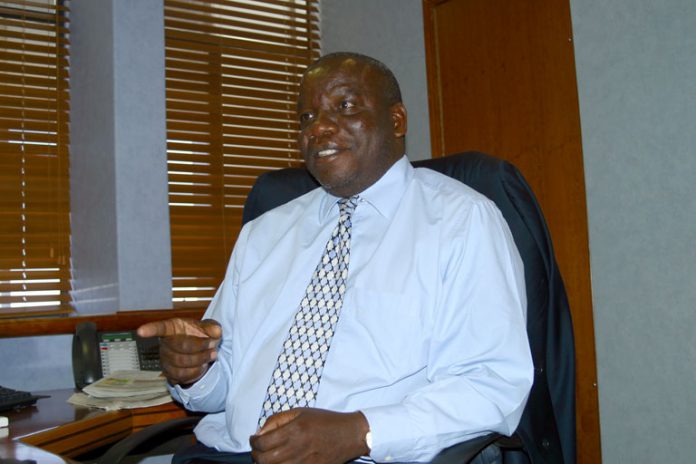
The appointment of an all too important and long awaited position of Deputy Managing Director Technical at Debswana was supposed to elicit a lot of excitement and fanfare at the diamond company.
But other than a tacitly drafted press release dispatched to media houses and company employees late this past week, the appointment of Sean Brennan was met with subdued interest tantamount to a shrug off.
The downcast mood among the employees is keeping in line with their smoldering life and death battle.
Brennan’s appointment at the world’s leading diamond miner coincides with what in many respects amounts to an internal revolution at the Debswana head office.
The Managing Director, Blackie Marole, is resolutely pushing ahead with a large scale unprecedented retrenchment exercise; and he doesn’t seem the least troubled by ongoing controversy the exercise has generated and the ferocious side campaigns to derail him and his project.
The retrenchment exercise is not only ambitious but also probably the most ruthless ever undertaken at Debswana head office, chopping off the heads of once sacred officers who have come a long way with the company.
Marole’s focus for now seems entirely set on the process.
Although he sometimes comes across as a man in self-doubt, his friend from their high school days at Gaborone Secondary School describes him as “methodological, steadfast and patient.”
“He is a very sincere man. I know he is worried at the bloated size of Debswana head office manpower. His take is that while in the past there were only seventy five people at head quarters servicing the whole company operations, that figure has by far ballooned to outstrip the growth of the entire group operations.”
The old time friend says which ever way one looks at it, Marole cannot fairly be faulted of insensitivity or brashness.
As Managing Director of the multi billion dollar diamond company, Botswana’s biggest and most prized, Marole’s job must count as the most prestigious in Botswana corporate enclave, but the truth of the matter is that the company’s outward success betrays an array of internal intrigues, plots and doggy trade offs that have accompanied his resolute dedication to cut off layers of bureaucracy at the head office.
He has lately watched with disbelief as, against his will, he got thrust in doggy tradeoffs with his senior staff members who have haggled to bring all sorts of insinuations to sidestep him.
While hoping quiet progress will win over his critics, swirling rumours of a less than cordial relationship with his deputy, Len Makwinja, have not helped matters.
Behind the two men’s smiles, it’s becoming increasingly difficult for Marole and Makwinja to hide their subterranean collision of ideas over where the company should be headed.
Curiously, at the centre of the two men’s differences is the role De Beers should play.
Managers at head office take a slight at Marole as a “De Beers man,” the company he worked for at their head office in Johannesburg.
He has also previously been attached to the company’s operations in England prior to his appointment at Debswana.
On the other hand, Makwinja, a product of Debswana scholarship programme, has worked for the company his entire life.
Junior managers, especially those whose jobs are on the line, are awake to shaft between the two men and are shamelessly manipulating the differences to their own benefit.
Sulking at what they perceive as a raw deal from their Managing Director, junior managers have already written Marole a scathing letter essentially accusing him of being a sellout who would thinks nothing of putting De Beers’ interests before theirs and that of Botswana.
They further accuse Marole of being cold and calculating, a sharp contrast to the flashy and extrovert qualities of Nchindo.
They are threatening to approach Debswana Chairman and Permanent secretary in the Ministry of minerals, Akolang Tombale.
Unrest is rife as others see this as Marole’s last dig at dismantling a wide network of personal cronies left by his predecessor Louis Nchindo, who still wields considerable influence by proxy through a set of loyalists he appointed to positions of influence shortly before he retired four years ago.
Over and above scores of clerical staff, the soft spoken former senior civil servant has made internal announcements that at least thirty management positions are on the line.
There is little doubt that the turmoil and uncertainty created by the imminent restructuring has dented staff’s faith in Marole so much so that other managers have started calling him uncharitable labels such as “the De Beers Man.”
Oddly enough, although the managers at head office are not against the retrenchment in principle and are not questioning the generosity of the severance packages put forward by Marole, they argue that job cuts should not be confined to head office.
They are chewing other totally different beefs.
They say the exercise should be further extended to the mines.
They go on to question the true motives and integrity of the human resource executive driving the retrenchment exercise on behalf of Marole.
Managers say not only is the executive an expatriate, he will also be out of Debswana in a few months.
However one looks at it, the next few weeks will be abnormally crucial to Blackie Marole on how he successfully stamps his authority at the country’s most celebrated company.

