

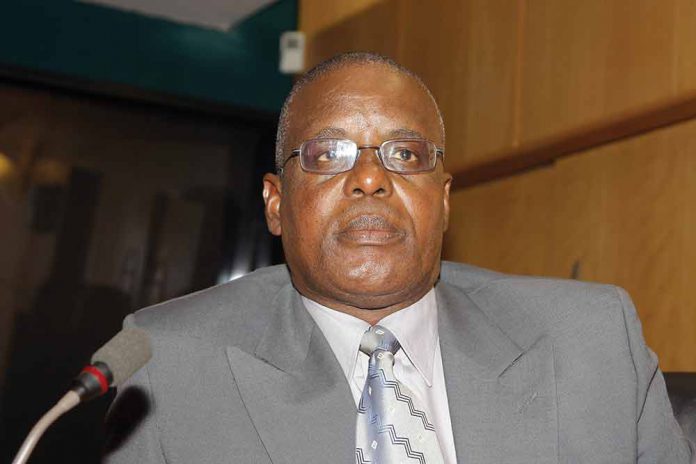
As multitudes gathered in Molepolole yesterday to bury GUS, the observation was inescapable that he was many things to many people and a somewhat complex personality in the political tapestry of this country. GUS died with his boots on right in the trenches of his singular, lifelong passion of politics. Many of my generation and those preceding us who got involved in politics were groomed directly by GUS when we arrived at the University of Botswana of the early nineties at a time when it was a hotbed of opposition politics. In common with institutions of higher learning the world over, anti establishment views flourished at our then only premier hub of learning. Ahead of enrolment it was drilled into us who displayed interest in national politics that the moment you entered the gates any sentiment partial to the ruling BDP was considered passe and best kept to oneself. In an era of leftist politics before the fall of the Berlin Wall, which in its wake swept away romanticized notions of how to achieve the perfect world, a safe space for a greenhorn pumped full of bombastic phrases was to associate with the opposition, which then was Botswana National Front student wing. They held sway and in subtle ways but which in positive testimony to the somewhat unusual politics of this country never crossed the line into outright intimidation and violence as was the case in other countries.
To blend in and wear the badge of intellectualism, BNF student movement known as Mass was the place to be seen. It all made for a nice little totalitarian student environment which brooked no dissent and in fact looked on with disdain at those who held a contrarian view in support of BDP, represented by the structure GS 26. Certainly by the time some of us arrived, BDP had its band of supporters but often one got the sense they operated more as an underground movement, always looking over the shoulder. I was one of those determined to put a stop to this and affirm BDP as a force in student politics. Governance on campus was dominated by opposition and they set the agenda for both internal and external campaigns, and one has to admit that in an era characterized by regional liberation politics, they did acquit themselves very well. In a country where being at university, and in a situation where most families were eagerly awaiting their first graduate, students were held in awe and notwithstanding their pie in the sky ideologies, were regarded with awe and when they took to the streets of Gaborone to march for one cause or the other, the nation stood still and listened.
Therefore to be seen outside this forced political consensus was a challenge to many and they either remained silent or out of conviction, or even peer pressure took up with Mass, relegating the BDP student wing GS 26 into a fringe outfit. Because GS 26 had to exist within BDP structures, it was designated a cell in Village ward of the then Gaborone South constituency hence the hyphen. The area was a fortress of BNF doyen Dr Kenneth Koma but it is against this background that we got to know GUS as the brave BDP man who contested against the opposition leader in the 1989 general elections and of course received a drubbing. With his then trusted henchman Sonny Moathodi we were schooled in BDP politics by the duo and by the time the 1994 elections came around some in our group were considered seasoned enough to be assigned roles in the campaign team including acting as rally announcers and polling agents on election day. Again GUS came up a cropper against Michael Dingake, now both vying in the new Gaborone Central constituency. It must be recalled that back then the whole of Gaborone was a BNF stronghold and only the brave and most loyal to BDP went willingly into self sacrifice. GUS stood head and shoulders above all as the quintessential activist.
A caution first culture that persists to this day made many BDP activists choose the safety of village constituencies and left the city, to borrow from Quett Masire, to the very brave, or foolish and invariably it ended in defeat. Had GUS in those years chosen the safety first principle and fled to a village constituency we might be talking of a man who could have gone all the way to occupy one of the top two positions of state. His career was crippled by immense love for the BDP but the less discerning of his party colleagues would dismiss him as serial loser from the safety of their village constituencies when they could never muster the guts to run in Gaborone. As GS 26 activists we existed within this eco system and were trained by GUS and his retainers. He became a mentor to our likes who without his patronage possibly could not have amounted to much. In fact some of us whose political careers were made and finished in Gaborone possibly were contaminated by his bravery or foolishness of not fleeing to our own home villages for assured and flourishing careers. Back then, through practical example from the likes of GUS we subordinated our personal advancement to the interests of the party in the name of sacrifice.
Against this backdrop GUS was an integral cog of BDP politics in the city and in the process built up an elaborate infrastructure when the infamous factional wars broke out during that period. Himself seen as an appendage of certain party lords, his influence extended beyond the city boundaries and every two years when the factions, Mmusi/ Kwelagobe known as Big 2 and the Merafhe/Magang given the moniker Big 5 battled for control of the party at congress, GUS was the kingpin who could be counted on to marshal the troops for his team. Factions would assume different nomenclatures depending on the season of war.
Later they would become Kedikilwe/ Kwelagobe and Merafhe/ Nkate only to transform into A Team and Barataphathi but always with the same cast of key belligerents. And always in the shadows like a stealth operator was GUS. He was a figure of great admiration in his faction. On the other hand he evoked fear and enmity from the rival faction who ascribed every congress setback to the dark arts of GUS who it was whispered had learnt them from his father, reputed to have been a crack strategist in Kweneng power tussles. Thus branded a war lord he became a polarizing figure in the party and this militated against his rise to national leadership prominence. Next to all this, GUS conducted a superb choir called International. BDP once had a buzzing culture of choral groups meant to disseminate the message of the party through song in addition to lampooning the opposition. With things evolving, the choral groups have lost prominence and in this context the death of GUS means the most accomplished trio of composers and arrangers of BDP melodies are gone.
Of the trio Moses Ntwaagae is somewhere in opposition following the schism of 2010 and Gomolemo Motswaledi, easily the most talented is deceased, save to say his story will be fully told some day. That said, as BDP fortunes improved in Gaborone , it would seem GUS just could not strike luck. In my life as a politician I have concluded with no fear of contradiction that good fortune or simple luck plays a role in political advancement and scholars of this discipline have tended to undervalue this aspect. No matter how talented or hardworking a politician one may be, if they do not enjoy a stroke of luck, wallow in immobility they will. In my time i have seen chancers and adventurists come along and without much effort, not to mention any iota of talent or hard work, attain advancement over those with better attributes. GUS was one such unlucky politician and despite being the most hardworking and committed of activists it just never worked out during his best years because the a lucky break which would have complemented his sacrifice and energy remained elusive. By the time of the 1999 elections I was head of secretariat at Tsholetsa House, a position I attained in no small measure to the efforts of the DK/GUS infrastructure. This time, ten years later he had decided to return to Gaborone South which he had lost to Dr Koma back in 1989. Once again the opposition leader prevailed.
A week after the elections I was alerted by my receptionist that a group of men were asking to see me. I wanted to know if they were party activists so I could get my bearings right because in my job that would enable me to know how to deal with the issues presented, and if they were factionalists I would respond in accordance with the expected script. On the phone and cupping the receiver she whispered that they were unknown to her. I met the delegation and in their introductions they informed me they were from Gaborone South constituency. They were community elders and some within the group owned up they were BDP. This was totally from left field. I practically knew everyone who was worth knowing in the party, particularly in Gaborone and these faces were unfamiliar. Settled, they got down to business and asked me to arrange for them a meeting with President Festus Mogae.
Fair enough such requests were a routine part of my work. But what is it they wanted to see the president about because I had to give him the heads up in processing their request. In almost mournful tone they confided that they had come on own volition because they were concerned that GUS had suffered enough in the cause of BDP. In meeting President Mogae they wanted to plead with him to send the man on a diplomatic posting. I was somewhat taken aback and prodded them if the subject of their mission had sent them. Response was in the negative and I had no reason to doubt because among the group were men of the cloth. We parted and days later they were in the presence of the president, a meeting subsequent to which GUS was duly appointed High Commissioner to Namibia. In honesty the delegation was correct. GUS was punch drunk and battered after all his heroic exertions for BDP over the years failed to yield fruit. Apparently the first offer given by President Mogae was the prestigious Washington station but GUS argued it was too far from home. Later those in the know would claim that GUS wanted to be nearby so as to keep an eye on things and re-launch his political career. Indeed that came to pass as his interest in the new Molepolole North constituency became apparent.
Whilst in Namibia the GUS legend grew with every telling and it was rumoured that he would drive from Windhoek in the dark, hold nocturnal meetings with his campaigners and be back in office the following morning. The truth is more prosaic. While outside the country, his mentor and political brother DK was doing the heavy lifting in the absence of his prot├®g├®. Tour of duty ended in the run up to the primary elections of 2003 which GUS won, and went on to take the constituency, marking his first electoral victory since he begun his quest in 1979 running for a Gaborone council ward against Maitshwarelo Dabutha, an election which was tied and had to be decided by a toss of the coin. He was then nominated to parliament as part of a group of Young Turks that comprised the inaugural BDP National Youth Executive Committee formed 1977. Returning in same capacity of special nomination after the 1984 polls, his stay in parliament was cut short by the Tshiamo ballot box incident in which after Peter Mmusi, the vice president to President Masire had defeated Dr Koma in the race for Gaborone South, an unopened ballot box was discovered, leading to a court petition and election re-run which the opposition leader won riding on propaganda that the ruling party was behind the shenanigans of concealing the ballot box in an effort to shore up the second man in charge. With the vice president in limbo the only solution was for one of the specially elected legislators to give way so as to accommodate Mmusi.
Ever the loyal activist, GUS volunteered to step aside as legislator and assistant minister. He was then appointed a diplomat in Europe which some considered a plum post but not so with GUS whose first love was politics and his party. Victory in 2004 was an outcome of his return to the village where political careers are longer than the suicide missions in Gaborone, which nowadays nonetheless consume all and sundry across party lines. With GUS back in the game, normal business resumed in all respects. 2009 saw GUS retaining his seat and gradually he gained the respect long due to him as a senior activist of long standing and experience. In a tribute this week Dumelang Saleshando who arrived in parliament the same year noted how GUS got on well with colleagues across irrespective of partisan affiliation in the chambers and outside. A very accurate description of the man because indeed he was an epitome of manners and decorum in terms of language and behavior. Even during the worst of factional wars he was always courteous and sought never to cause offence. His style was of cultured politics, far removed from rancor and acrimony in favour of strategy and guile.
As an affable war lord with a wicked sense of humour he would be gracious to those on the other side of the factional divide in the process of plotting their downfall. The only time GUS vanished from action was in the chronology of events that birthed the BMD and I never found out why. Whether it was heartbreak that many of his products were founders of the new movement and there was nothing he could do to prevent its inevitable formation now exists in the realm of speculation with his passing. But this vocation to which we have committed our lives can also visit cut the ties that bind relationships. The year 2015 was one of my worst in politics when I found myself having to contest for the position of Secretary General against GUS, whom I considered a mentor and up to this day I am yet to figure out what came between us. That, though is another story for another day but GUS to me remained a person generous of heart when it came to imparting his knowledge and skills. He could spot talent and go out of his way to nurture those in whom he saw potential but of course only if they did not go astray and work against his interests. Those that chose a path different were doomed to perdition with GUS faithfully shepherding them there. Despite defeating him in Mmadinare I did not feel triumphant, but rather sad as I reflected on his role in my life suffice to say in the final analysis the encounter left both of us scarred . In spite of this terrible episode we continued to work together and I extended to him my deference from all those years ago when I joined GS 26 and he nurtured me.
It was in my new role that we went about our functions with him as convener of the Political Education and Elections Sub Committee(PEEC) reporting to me, mentor to student. GUS was always a workhorse and whilst some of us took our days off to pursue other aspects of life away from BDP, his was a disposition anchored around the party. He put in the hours in building up to the 2018 primary elections which his sub committee was charged with running. In the months leading up to his demise GUS seemed to be making his final contribution to the life long labour of his love, organizing the primaries alongside campaigning to be returned to parliament in Molepolole North, having become a casualty of the 2014 UDC tsunami. His was akin to a death foretold because the morning of his passing he was in meetings putting final touches to what was clearly an onerous undertaking due to culminate next month. That is why I say GUS died with his BDP boots on. No one could prevent the hour of his passing because its time had come. But wherever he is GUS must be now at peace because his final innings came in service of his beloved party. Farewell GUS!

