

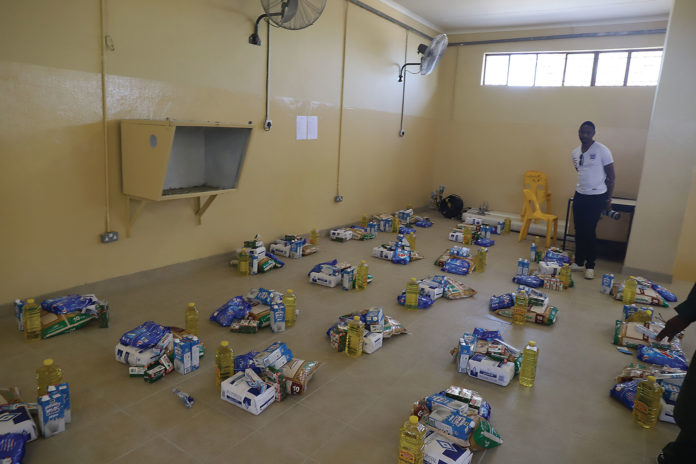
An Emergency Appeal evaluation report by the International Federation of Red Cross (IFRC) has shown that in Botswana, discussions with beneficiaries at group meetings preferred food vouchers to cash.
The emergency appeal by IFRC during the Covid-19 pandemic covered Botswana, Lesotho, Eswatini and Nambia.
“In addition, from the survey, majority (71.3%) of beneficiaries in Botswana preferred vouchers as a modality to address their food and basic needs. In-kind support, which was largely utilized during lockdowns due to Covid-19 and at the beginning of the Emergency Appeal, was preferred only by 10.3% of the beneficiaries sampled,” the report say. It shows that only 20% of the beneficiaries would have preferred the assistance was offered in cash,” states part of the report.
The report says in Botswana, the actions of the Emergency Appeal mainly covered food expenses of the beneficiary households through food voucher system.
According to the report, modalities for agricultural recovery were relevant since backyard and keyhole gardens utilized beneficiaries’ existing capacities such as land and basic knowledge in agronomy. The Emergency Appeal actions built on these capacities by improving knowledge of the beneficiaries through training in Climate Smart Agriculture as well as provision of farm inputs to increase production.
At the time of the evaluation, Botswana Red Cross was at preparatory stages in the implementation of backyard gardening modality while Namibia Red Cross did not implement any actions related to the agricultural recovery.
Majority (71.7%) of beneficiaries in Namibia indicated that the cash they received was adequate while in Botswana, 77.2% of the beneficiaries reported that the voucher adequately covered their food and basic needs.
Over half (55.3%) of the beneficiaries in Eswatini reported that the cash received was adequate while only 34.1% of beneficiaries in Lesotho felt the same. Duration CVA lasts in households: Across the four countries under review, majority (72.6%) of beneficiaries reported that the CVA support they obtained lasted between three to four weeks while the rest (27.4%) said that the assistance lasted for just one to two weeks in their households. The duration the assistance lasted in the households was heavily dependent on the number of people and whether a household had income to supplement the support they received from EA.
In Botswana, the value of the food voucher was determined based on the agreement between the National Society with selected shops in the surrounding community. This amount was aligned to that of the government drought response plan. The food voucher was worth 800 Pula (CHF 67.94). In Namibia, the cash transfer value was based on the National food Basket value and a top-up to cater for transport to the nearest town cash distribution Centre.
In Botswana, the Appeal reached 300 households (by the time of the evaluation) and in gender terms there were 47 male and 253 female headed households. In addition, in Eswatini, through backyard gardening modality, there were 400 male and 561 female beneficiary headed households.
In cash transfer, there were 799 male and 1468 female headed households. Lastly, with seed inputs/agricultural support a total of 706 male and 1273 female headed households benefited from the actions of the Emergency Appeal. In Namibia, the Emergency Appeal actions reached a total of 1,204 households. In gender terms, a total of 655 female and 549 male headed households were reached by the Emergency Appeal actions.
The report says timeliness in the implementation of the Emergency Appeal actions was heavily influenced by COVID- 19 containment measures, including lockdowns, movement and assembly restrictions as well as safety distancing protocols. Secondly, procurement processes and inadequate staffing delayed implementation of Emergency Appeal actions in all the four countries.
The use of the cash transferred from the Emergency Appeal actions was consistent with the manner in which beneficiary households utilised earnings from their main source of livelihood. Across the three countries (Lesotho, Namibia, Eswatini) where cash transfer modality was utilized, beneficiaries used the cash to address needs beyond food including savings, covering health expense, paying school fee, transport to work and clinic, purchasing farm inputs, non-food basic goods as well as income generation. Since this was a food security intervention, beneficiaries largely used the money they obtained in cash transfer to address their household food needs. The proportion of the beneficiaries who utilized the cash transferred to purchase food in Namibia was 98.9%, while in Eswatini and Lesotho they were 83.5% and 98.9% respectively.
The report says Community Engagement and Accountability minimum standards were largely utilized by the four National Societies during beneficiary selection and in obtaining feedback on implementation of the Emergency Appeal actions from beneficiaries.
Across the four countries under the Multi-country Emergency Appeal, the lean season starts April through to September the beginning of rainy season. However, this hasn’t been the case in the recent past because of the effects of climate change across the region. The period of support of six months was based on the premise that rains would return at the end of lean season and demand for agricultural labour would increase to provide income to beneficiaries.
Secondly, livestock production would increase and the sales thereof; across the four countries there would be flow of remittance from South Africa and manufacturing of products in agricultural value chain would restart/begin to create jobs and market opportunities. This was not the cases because of COVID-19 pandemic. The number of installments therefore was not sufficient. The number of the installments of the CVA support varied from one country to the next. For example, Botswana had eight, Lesotho had six, Eswatini and Namibia had six and five respectively.

