
“Sanitation is more important than political independence,” Mahatma Gandhi once mentioned. These words ring truer than ever in Botswana, considering the importance of hygiene in the foundation of health and development for communities and in reducing the spread of the corona virus.
At the 9th World Water Forum which was hosted for the first time in sub-Saharan Africa on 21-26 March, 2022, the Chairperson of the African Union (AU) and Senegalese President Macky Sall said: “Water security for peace and development” aims to provide a unique platform for the water community and decision-makers to find solutions to increase access to water and sanitation across the African continent by 2030. The 2030 Agenda for Sustainable Development Goal on water and sanitation (SDG 6) which seeks to ensure safe drinking water and sanitation for all is regarded as one of the keys to a healthy, comfortable and dignified life. Ambitious indicators for WASH services (water, sanitation and hygiene) fall under targets 6.1 and 6.2.
However with only eight years to go until 2030 which is the endpoint of the developmental goals, data shows that Botswana is lagging on most targets such as SDG1 no poverty, SDG2 zero hunger, SDG3 good health and well-being, SDG7 affordable and clean energy, SDG9 industry, innovation and infrastructure, SDG10 reduced inequalities, SDG 12 responsible consumption and production and SDG16 peace, justice and strong institutions. Fortunately, the country is doing fairly well in SGD6, that is, sustainable management of water and sanitation for all. A WHO report entitled: “World health statistics 2021: monitoring health for the SDGs, sustainable development goals” corroborates these findings noting that because of the improvement in hygiene services in Botswana, the WASH mortality rate or deaths attributable to unsafe water, sanitation and hygiene was 11.8 deaths per 100,000 population. This was one of the best scores in Africa.
In Botswana, between 75 and 79 percent of the population was using at least basic sanitation services as of 2020. A UNICEF/WHO special report notes that achieving universal coverage by 2030 will require a quadrupling of current rates of progress in safely managed drinking water services, safely managed sanitation services, and basic hygiene services. The report entitled “Progress on household drinking water, sanitation and hygiene 2000-2020: five years into the SDGs” notes that while basic sanitation in Botswana increased by at least five percentage points between 2015 and 2020, the country recorded the least progress in increasing basic sanitation among all African countries.
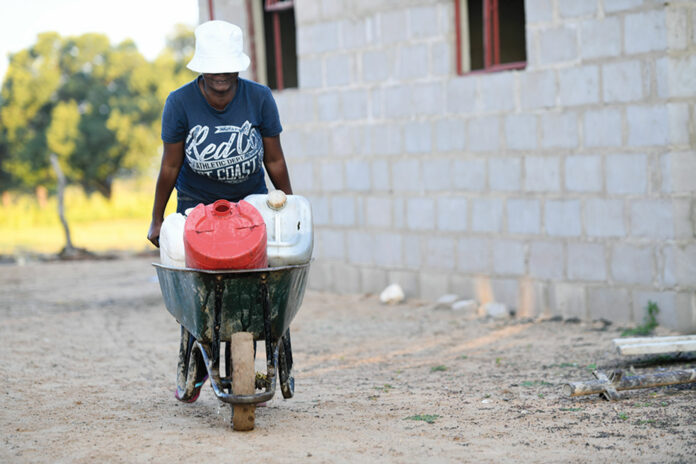
Significant inequalities persist in Botswana between urban and rural, and the richest and the poorest. Currently, the proportion of Botswana’s population in rural areas using piped water decreased from 77 percent to 76 percent in 2015 and 2020 respectively. On the other hand, the proportion of Botswana’s population in urban areas using piped water supplies decreased from 97 percent to 96 percent in 2015 and 2020 respectively. The proportion of Botswana’s population in rural areas using improved water supplies accessible on premises improved from 45 percent to 50 percent in 2015 and 2020 respectively. On the other hand, the proportion of Botswana’s population in urban areas using improved water supplies accessible on premises improved from 92 percent to 95 percent in 2015 and 2020 respectively.
Furthermore the percentage of the population practising open defecation decreased from 12 percent to 10 percent in 2015 and 2020 respectively. Open defecation is defined as the proportion of the population who usually don’t use any kind of toilet facility for defecation. However people who use sanitation facilities such as pit latrines without slab, open pit, or hanging latrines, are not included among those regarded as practising open defecation.
A fortnight ago, the World Health Organisation (WHO) and the United Nations Children’s Fund (UNICEF) announced that there is need for urgent action to be taken in Africa where water scarcity and weak sanitation and hygiene services can threaten peace and development. This announcement was made on World Water Day – an annual United Nations observance day held on 22 March that highlights the importance of fresh water. Studies show that more than two billion people across the African continent lack basic WASH services, including 208 million that still practice open defecation.
As things stand, Botswana is facing a deficit in the financing she requires to keep her on course to achieve the 2030 Sustainable Development Goals (SDGs), as she contends with the health, economic and social impacts of the pandemic. And while there is significant progress in WASH targets in Botswana, current rates should be increased and more attention should be given to address the significant sanitation inequalities which persist between urban and rural, as well as the richest and the poorest.

