

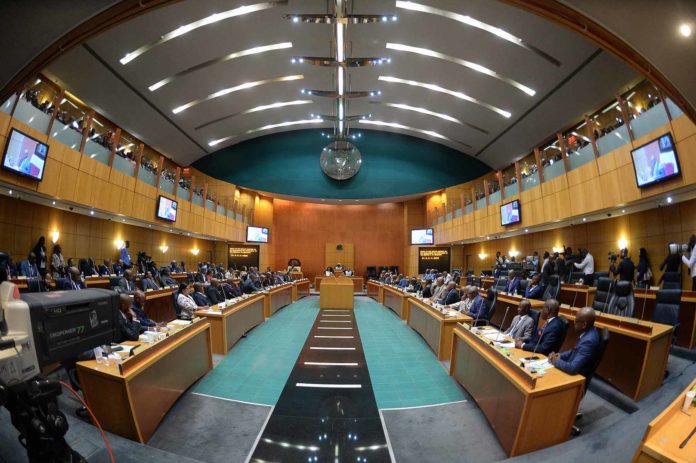
With less than 10 women Members of Parliament in the current twelfth parliament, Botswana clearly ranks among countries whose women representation is still by all standards very low.
A 2014 Botswana Institute for Development Policy Analysis (BIDPA) policy brief on Gender and Political Representation in Botswana authored by Keneilwe Mooketsane found that the underrepresentation of women, who make 52 percent of the national population, in political positions has far reaching implications.
According to the policy brief author, equal participation of men and women in decision making is a necessary course for social, political and economic development. Inclusive and participatory development is desirable for both developing and developed countries. As a democratic nation, Botswana’s elective bodies should be seen to represent the nation’s diverse perspectives and interests. Furthermore, the country must offer equal economic opportunities to all citizens.
Gender equality is defined as the measurable equal representation of women and men. Mooketsane states that contrary to the misconception, “gender equality does not necessarily mean that men and women are the same, but that they have equal value and should be accorded equal treatment”. Gender equality is perceived as an end in itself as it is a human right; and as a means to an end, it is included as one of the Millennium Development Goals (MDGs).
The author also argues that compared to men, women in Botswana are disadvantaged due to traditional roles and perceptions. As a result, women have suffered various forms of discrimination, inequality and sometimes exclusion. This has created grounds for constitutional and policy changes to empower and include women in political and economic processes.
Botswana is one of Africa’s unquestioned top performers in many governance indicators. The country has performed highly in terms of political and economic development. “Botswana has the lowest rate of participation and representation of women in politics in the Southern African Development Community (SADC) region. While the situation has improved in terms of the presence of women in managerial positions in the public sector”, it is explained.
While women form the majority of the country’s population, their representation is decision making bodies is not proportional to their numerical strength. “Women in Botswana also vote more than men but still remain underrepresented”, laments Mooketsane explaining further that in 2004 311 265 women registered to vote compared to 239 148 men. In 2009,404 238 women registered to vote compared to 321 534 men.
Mooketsane explains that a number of reasons have been advanced for the poor representation of women in parliament which include among others; expensive electoral campaigns. It is reasoned that women’s inferior economic means in comparison to men is the most underlying reason disadvantaging them.
Lack of state funding of political parties is also cit6ed as an exacerbating factor that entrenches existing economic inequalities. The other reason advanced is that women tend to shy away from politics because of the attitudes of men who disrespect them by using harsh and derogatory language them during campaigns.
It is also argued that women are patronized by communities as society “does not see women as leaders therefore women do not see themselves as leaders in their own right”.
Other negative factor is apportioned to the electoral system in place that affects women representation in the First Past the Post Electoral System since its inception. Although the system has served the country well as it has produced a stable and strong government that implements policy, an electoral system needs to be constantly reviewed and reformed to accommodate changes and new challenges.
“It has been established that countries with proportional representation systems tend to have higher women’s representation as compared to countries with majority or plurality systems. The proportional representation system has been noted as the most effective electoral system in increasing the number of women representation in SADC countries. Proportional representation allows political parties seats in proportion to their share of the national vote. Women stand a better chance of electoral representation with the proportional representation than other electoral systems, particularly the FPTF which is currently used in Botswana”, argues Mooketsane.
It is added by Mooketsane that the lack of legal measures compelling political parties to field female candidates, women’s lack of resources, culture and societal attitudes as well as the government’s inability to place more women in parliament exaggerates the ineffectiveness of the FPTF.
It is recognized that arguments against the FPTF system are that it exaggerates electoral dominance of the ruling party and is not responsive to changes in public opinion, and that it excludes minor political parties as well as some groups of the society such as women and ethnic minorities.
To partially remedy the identified anomalies, a quota system has been recommended for employment at political party level or at national level, voluntarily and mandatorily. Kenya, Rwanda, Tanzania, Uganda are some of the African countries with constitutional quotas. Those countries’ constitutions provide for 30 percent special seats reserved for women in the national assembly.
This way some seats are reserved for women ensuring that at least there is some fair representation. These of quotas as a measure of affirmative action used in some African countries has resulted in improved numbers of women in local governance bodies and the national assembly.
It is also argued that political parties have an important role to play in promoting women’s participation in politics and decision making. A political party that is committed to equality can demonstrate it through party quotas. In Botswana opposition Botswana National Front and Botswana Congress Party have committed for a 30 percent quota representation of women in all their structures. However, the two opposition parties are blamed for their failure to implement the commitment.
As for the BDP, it is stated that as a domain party and well-resourced with more established stronghold constituencies as compared to other political parties, meaning that women in the BDP stand better chances to win should they be afforded the much-required support and opportunities.
“For any effective change regarding the empowerment of women themselves need to be at the forefront articulating their needs and advocating for change, acting as catalysts for the change they would like to see”, advises Mooketsane.
In conclusion Mooketsane argues that enhancing political representation of women requires changes within the political party systems, national policies and the legal framework to allow for the inclusion of women.

