

Time!
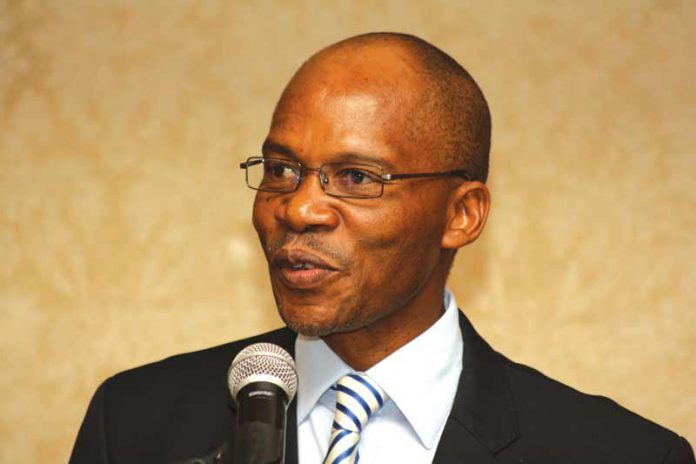
Of all the battles of his career, there is one that Kgotla Ramaphane knows he cannot afford to lose. It is against the great tyrant, time. “Privatisation is no longer an option but an imperative. Government revenues are shrinking. There is more demand for services. This means that as part of economic reform, privatization should be driven with vigour“, he says.
Ten years after Government of Botswana announced efforts to privatise a number of key states assets, little has happened on the ground to transfer those assets into the hands of the private sector and time has become a four letter word.
The Chief Executive of PEEPA, the agency that was set up to drive privatisation says those ten years have however not been wasted in vain.
They were spent cultivating groundwork behind the scenes, far from the public who are eager to see evidence in the number of transactions carried out.
Ramaphane is abnormally aware that to an outsider, the nagging concern is that PEEPA has not been able to deliver on its mandate.
He is however adamant that the ten years from inception of PEEPA have been spent consulting stakeholders, preparing the ground and establishing internal processes.
Ramaphane is of the view that being a new process in Botswana, involving many stakeholders who hold different and sometimes divergent views it was always going to take time to get everybody on board.
The fact that many of the entities lined up for privatization were established under different statutes, with many of them operating as virtual monopolies – by law and by fact – has also meant that PEEPA was forced to take time studying the many structures and the market conditions before big decisions were made on how to approach individual privatisation transactions.
“There has been a need to reestablish regulatory frameworks. Safety standards had to be revisited and enhanced. We had to make sure that quality of service was not compromised. More crucially it was also important to ensure that there did not arise any anti-competitive tendencies,” says Ramaphane.
In all these undertakings PEEPA was forced to come up with totally new pricing structures to cater for such diverse areas like water, energy, telecommunications, mining and transport.
“It would have been a big mistake to rush privatisation through without first establishing the right framework,” he says as a matter of fact.
Ramaphane is however increasingly aware that while from the beginning Botswana’s privatisation was a home brewed initiative that had not been imposed from outside by any external forces, time is running out and the dynamics are fast changing.
As a result of the fast changing economic landscape it now means time has become a factor of great essence, he says.
“The imperative is now,” he told a large gathering of business and policy leaders recently when he unveiled the new look PEEPA.
For their part, organised business is not at all enchanted by the snail pace at which the process has been going over the years.
It has also not escaped their attention that transactions like that of Air Botswana have had to be shelved, at least three times after public announcements had been made that cabinet wanted to sell away a stake of the airline. To them every delay means missed opportunity for business and added costs to the government and country.
To these charges Ramaphane agrees.
He however points out that government has not altogether abandoned privatising Air Botswana.
He says as a result of changed circumstances the priority now is to re-fleet and recapitalize the national carrier before a stake is staved off, possibly to a strategic partner.
One other area of discontent among organized business is the absence of an overarching law that drives privatization.
When we meet him at his office, Ramaphane is quick to point out that while many people have called for such a law, a decision has been made that rather than come up with such a single piece of legislation government has opted to approach all transaction on a case by case basis.
This means that where it is deemed necessary amendments to existing laws will be made as is currently the case with the ongoing privatisation of Botswana Telecommunications Corporation, a key state owned asset in the area of telecommunications.
The head of BOCCIM, which represents organised business in Botswana, says it is not good enough that ten years on people are still discussing the pros and cons of privatisation. Maria Machailo-Ellis says there is need for clear commitment, including political will from the highest office.
┬á“We continue to track this progress. Our view is that we need commitment from the highest office,” she said at a recent gathering by PEEPA.
To business concerns at the inordinate delays, Ramaphane says for Botswana, privatisation has meant change management at a national level, involving too many stakeholders and like any new process “you are bound to face anxiety.”
He steadfastly refuses to use the word “resistance” to explain the delays.
“People approach this process with caution. It is the first major departure from what we are used to. I don’t see resistance, but caution. You are telling people who have never privatised anything before to do it. You are telling them to break apart those institutions they have built over many years. These people include policy makers, politicians and managers.”
To justify the caution, Ramaphane says all involved want to get it right the first time because they do not want to reverse privatization that would have gone wrong.
Trade Unions have also waded into the process, and as ever their involvement has tended to have a stifling impact on the pace of the process.
With regard to the privatisation of BTC which by all accounts will become the country’s guinea pig if the transaction ultimately goes through, labour organisations are worried that only the wealthy citizens stand to benefit from buying into the 49% stake that Government has allotted for privatisation.
To allay such fears, Ramaphane says a decision has been made to lower the price of shares so that as many Batswana as possible participate.
Thus a decision has been made that a share of BTC will not exceed P2 as a way of enabling a broad-based citizen participation.
But what has PEEPA discovered as internal deficiencies so far in its interactions with entities earmarked for privatization.
So far PEEPA has found out that there are instances where mandates of certain parastatals overlap as to conflict with one another.
Some parastatals have the same client base but fall within different reporting line ministries.
Other parastatals tend to share mandates with others.
“This in our view works against cost efficiencies. It is certainly not the best way to utilize resources, be it money or human resources,” he says.
To correct such shortcomings, PEEPA has been instrumental in streamlining internal process within parastatals including by way of improving shareholder oversight efficiencies, chiefly through the appointment of relevant and appropriate board directors.
While cabinet has turned down calls for a single overarching law, a big concession has on the other hand been made to strengthen the PEEPA’s depth of involvement.
While hitherto the agency’s role was only confined to advisory matters, Government has enhance such a role by allowing PEEPA to now become transaction project managers including allowing the agency to also review the transactions.
“Let us give the enhanced mandate more time before we can go back to government to ask for more powers,” says Ramaphane.
The agency has now set itself new targets Strategic Plan that will cover the period 2011- 2016 and it is not backed by new role of implementing the decisions made by government.
Not for the first time during the interview Ramaphane emphasizes the importance of time. He underscores the fact that economic scales have shifted and government revenues are dwindling. “Privatisation is no longer an option but an imperative. Government revenues are shrinking. There is more demand for services. This means that as part of economic reform, privatization should be driven with vigour.”

