

A new breed of activist seeks to redefine the national agenda and bring back the sacred teaching ÔÇô honour thy mother and father.
Close your eyes. Imagine a lush garden with every conceivable fruit and vegetable species ÔÇô enough to feed, say, an entire city. Imagine that the place is tendered for entirely by elderly folks, working with renewed vigour and a sense of purpose.
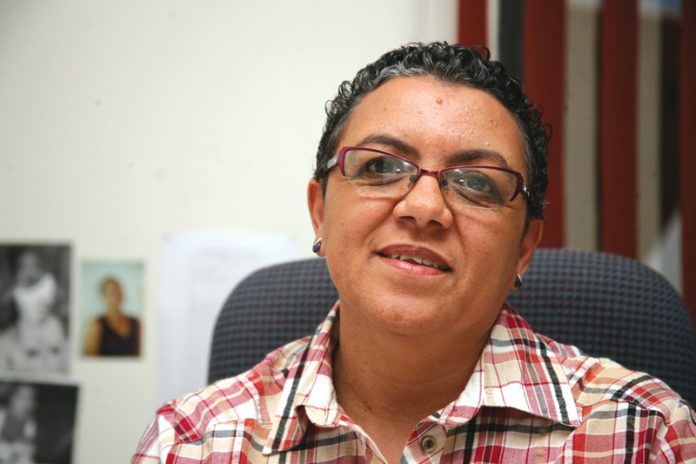
Open your eyes ÔÇô and please meet Mabel Basson, whose dream you’ve just envisioned. She is the founder of Bagodi Ba Rona Association, a newly registered NGO that seeks to bring issues affecting the elderly to the national agenda.
“We want to be a platform and voice for the elderly,” she explains the organisation’s raison d’├¬tre. “They are not represented anywhere; infact, they are totally left out. We also want this association to be a network forum for the elderly which can help them to link with each other. Ultimately, we want to be a one-stop centre that offers the elderly whatever assistance they may require, and even take care of them.”
Bassoon traces her passion for working with elderly people back to 1993 after she became a born-again Christian. The urge has been there ever since, but she only started doing something about it in 2003. It began on a low scale. She got in touch with a few elderly people (aged 65 and above), organised them into a group that met fortnightly and introduced some activities such as sewing, gardening and health discussions. It caught on, and the original members soon introduced friends and neighbours. It now includes some men, which is quite a development given that the original circle was almost exclusively women. Initially, to draw men in was too hard a task, so Basson concentrated on the women, and they in turn have worked on the men. A few volunteers have also come onboard.
The group still meets fortnightly at the Old Naledi Community Centre, but the range of activities has grown.
“We even have our wellness days,” she laughs. “Sometimes we meet just to have a meal and chat about their concerns. This thing has now become a social gathering for them.
Like a common thread, she has observed that most are concerned about loneliness, which sometimes leads to depression.
“Most say that they have no activities that engage them; they have no jobs. Some don’t have families and children. But these are people who have so much to give in terms of skills, experience, and knowledge which they are prepared to share. They are seamstresses. They make beautiful handbags. Unfortunately, there is no outlet for them to get exposure and access to the market,” Basson says.
Operating without an office and a place to call one’s own obviously presents challenges. It limits what can be done. What Basson wants to see happening, is partly what has been described in the opening paragraph of this article ÔÇô a dedicated multi-purpose centre that would offer an array of services for the elderly, and also engage them in a way that would fulfill and give them a sense of purpose and self-worth.
“I would like to see the centre in a place that is large enough to grow our own vegetables to be able to feed our elderly and sell to the market,” she says. “Such a centre would also be a resource centre because a lot of elderly people are skilled in sewing, knitting, leather-making and farming. We could utilize their skills and even outsource them to different organisations, especially new businesses that can’t afford expensive consultancies. It is possible that there are people throughout Botswana with the same passion and vision, who feel as we do. As we establish ourselves here, we will link up with such people to establish similar facilities in their own villages and towns.”
After a couple of fundraising activities held towards the end of last year, Basson was overwhelmed by the response from different people. Even more humbling were enquiries from the corporate sector on possibilities of partnership.
“Oh no,” she answers when asked if society accords the elderly due respect and courtesy. “When an individual reaches a certain age, we treat them almost as if they’ve expired, or a statistic for old age pension. In other countries, they qualify for discounted transport, and certain stores offer special prices for them. But in Botswana we have nothing for our elderly. When they go to the clinic, they have to sit in the queue like everybody else. But some of them are not well. The only place where they seem to be accorded some respect and worthy treatment is the post office ÔÇô and only then because they have a dedicated teller.”
Evidently, that points to a plot gone somewhat off beam. If you ask Basson where we lost it, she points to the country’s rapid acceleration from the traditional society.
“We have tried to westernize too much and became extreme,” she points out. “We as parents have not instilled certain values in our children. How many of us see our parents often, or send our children to our own parents to learn our culture? Our children are always with us in cities. They are the Playstation generation, and they don’t understand where we come from. The parents are not helping the situation at all. If I were to correct a child, chances are the parent wouldn’t take kindly to that ÔÇô and they would express their disapproval in front of the child. It breaks my heart. We have lost it and it’s up to us to change that.”
Even as it appears that so much damage has been done to the fabric, she nurses the hope that something can still be salvaged. What keeps such sanguinity alive is traced to her mother’s experience.
“My mother was 81 when she died in June (2009), but she was still agile,” Basson says. “She used to go into town on her own, and she would always tell me how a certain taxi driver was very helpful. I believe there is hope. Unfortunately, a lot of us forget that we are also going to be old. Would we like to be treated negatively? I don’t think so.”
She suggests that there should be legislation to ensure better protection for the elderly, who are not even spared the spectre of violent crime, often in their own homes. But ultimately, she points out, the solution lies in getting the moral compass right ÔÇô and that is “looking beyond our own little units and extending help to others in need”. The next level would be for parents to raise their children to learn to show respect outside the inner circle of family, relatives, and parents’ friends.
“I grew up Serowe and we were brought up to know that any adult was our parent, and any adult could correct us. Today, when I see a young boy or girl disrespecting an elderly I cringe because to show disrespect to any adult is to curse yourself. We have not taught our children that the elderly can bless you.
“That’s why as a nation, we are failing our elderly. Other countries make adequate provision for their senior citizens. Some have homes where you either pay upfront while you are still working so that you can retire there, or government simply provides a facility. But in Botswana, here we are ÔÇô aging and nothing is being provided for us. We have discarded that which worked for us, which is the extended family system that took care of our elderly. Other nations have adopted it, and it works them. We are where we are because of these people. All they need is just an acknowledgement. We are all focusing on the youth, and it’s a good thing because they are the future. But what about the past? Does it not matter?” Basson says.
At a time when everyone seems to have suddenly woken up to the moral decadence all around, Basson says we are reaping what we’ve sown over the years ÔÇô discarding old people. The harvest is plenty, and it’s the indiscipline on the roads, children hooked on alcohol and drugs, and the general loss of control.
“Every parent is crying,” she says. “We have lost control of our children because we have kept them away from their grandparents. My own children sit here and say, ‘this is what I learnt from granny’. We are denying our children such valuable knowledge and skills that they can only learn from their grandparents. I am only thankful that I had my mother for so long and that I allowed her to be involved in the upbringing of my children. Unfortunately, we believe our parents are too old.”
As we wind up, let’s end as we started. Close your eyes. Imagine a place where, as the saying goes, it takes a village to raise a child. Picture a street where neighbours refuse to be isolated by the walls.
Open your eyes for Mabel Basson’s parting line.
“We have isolated ourselves ÔÇô even from our neighbours because of the walls around us. If we interacted with our neighbours, we would share experiences and learn from each other. It’s up to us to begin to do things right and involve the entire community in raising our children, and only then will they learn to respect the elderly,” she says.

