

A fresh report published by the International Renewable Energy Agency (IRENA), notes that Botswana has vast renewable energy potential, particularly solar, wind and bioenergy.
With Botswana aiming to source 15% of its energy from renewables by 2030, and 36% by 2036, the Renewables Readiness Assessment (RRA) prepared by IRENA notes that Botswana has extensive solar and wind potential which could be utilised to enhance domestic energy security and increase access to modern energy services. A Renewables Readiness Assessment (RRA) is a holistic evaluation of a country’s conditions that helps to identify the actions needed to overcome barriers to renewable energy deployment.
Director-General of IRENA, Francesco La Camera says Botswana possesses substantial potential for renewable energy development. La Camera “recommends various short-to-medium term actions for developing the basis for a transition to renewable energy, including in the areas of policy, regulation, risk, investment, skills development, electrification and generation, and end-use applications. These actions can contribute to creating a more conducive investment environment for renewable energy by addressing key challenges to the energy transition”.
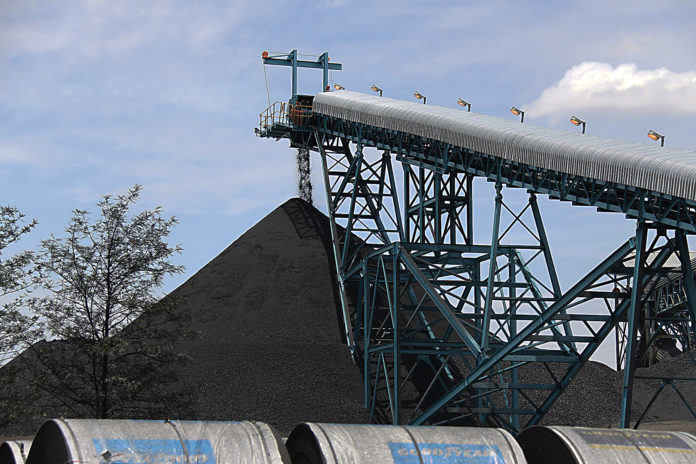
Although renewable energy remains largely untapped, Botswana is still heavily reliant on coal for the generation of electricity with installed generating capacity of over 850 megawatts (MW), consisting of Morupule B which is the largest as well as Orapa plant and Morupule A.
While numerous reports have been published which highlight that the world’s vast untapped amounts of coal must not be exploited if the global village harbours intentions of keeping global temperature from rising above the safety limit of 2 degrees Celsius, many countries are still defending their use of coal.
Botswana is one such country which is rich in fossil resources and is estimated to have over 200 billion tonnes of untapped coal reserves. However, Botswana’s continual use of coal and the slow pace of turning to renewable energy has many people questioning Botswana’s commitment to renewable energy transition.
Although the ministry of environment claims they are in the process of transforming the country into green energy, the situation on the ground seems to paint a different picture as coal still elevates the country’s levels of air pollution.
Delivering his presidential keynote address at a virtual mining Indaba Virtual held a few months ago, President Dr. Mokgweetsi Masisi said since Botswana’s diamond industry is losing its sparkle, which is also being exacerbated by the Covid-19 pandemic, Botswana would now start to develop coal and base metals sectors to reduce overreliance on diamonds.
“Over-dependence on diamonds has more than ever made it imperative for us to urgently expand our revenue base to other minerals such as coal and base metals,” said President Masisi, adding that “Botswana has large coal reserves estimated at 212 billion tonnes which are largely unexploited. To this end, Botswana has developed a coal road map that identified eight potential options with the aim to increase the contribution of this resource to our economy.”
While the push for more coal power could be justified as a way of propping up the economy which has been battered by Covid-19, environmentalists says coal is the most carbon-intensive fossil fuel. Interestingly, the push for more coal power also appears at odds with Botswana’s climate goals.
At a national level, the use of coal might make business sense since the country often relies on South Africa’s Eskom for its increasing energy needs. There will be economic implications for Botswana to suddenly do away with its vast coal reserves. However from an ethical point of view, this might seem devious as it throws doubt as to whether the country is capable of fighting climate change. The shift away from fossil fuels, which scientists say has to happen by 2050, is expected to require a major overhaul of world economies.
For Botswana the issue always goes back to the fact that the country wants to be less dependent on energy importation from countries like South Africa. This is why Botswana seems to be ramping up its use of coal power plants. Botswana’s argument that it is a low emitter is not a license and good enough reason for the country to increase its use of coal. If Botswana wants to exploit its coal in an environmentally sustainable manner, it would mean that the cost of mining would increase significantly.
Furthermore, if Botswana decides to use carbon capturing techniques, it would prove to be a very expensive undertaking. However, the use of carbon capturing techniques at Morupule Coal Mine would send a strong message and prove Botswana’s commitment to reduce the release of carbon emissions into the atmosphere. The only question is if the country is prepared for the cost that comes with it.
Botswana’s share of world’s fossil carbon dioxide (CO2) emissions is 0.02%. Carbon dioxide emissions are those stemming from the burning of fossil fuels and the manufacture of cement. They include carbon dioxide produced during consumption of solid, liquid, and gas fuels and gas flaring.
Although COP26 will be a key test of Botswana’s resolve to tell the world on how the country plans to cut greenhouse emissions, this is a hard ask for Botswana and a sizeable number of countries because coal still remains a major source of energy.
Any transition to green energy will be a slow process and Botswana is not to blame. As we speak, coal companies are reported to be among some of the sponsors of the COP26 and this shows that lobby groups are working behind the scenes to make sure that the industry does not die.
The use of coal will be a hot topic as countries gather in November for the United Nations Climate Change Conference, also known as COP26. The 2021 annual climate change summit which is the 26th United Nations Climate Change conference will be held in Glasgow, Scotland, under the presidency of the United Kingdom.
This year’s conference is very important for three main reasons. It is at this conference that work that COP25 was unable to conclude will be finished which includes setting out the rules for a carbon market between countries. This year is also the year when all countries are required to submit their new long-term goals and third is that the implementation of the 2015 Paris Agreement will be the key driver of international climate action from now on.

