

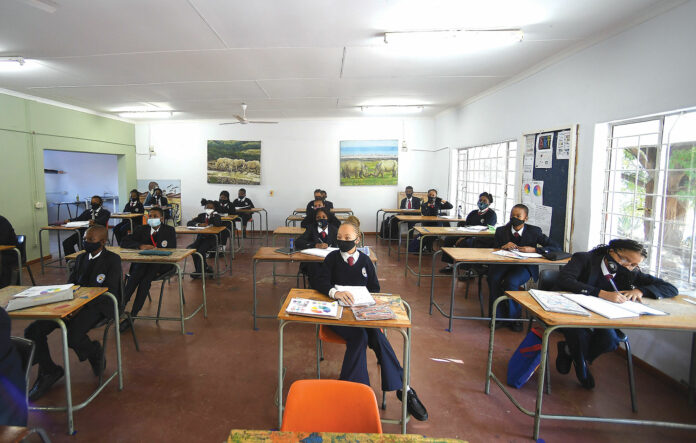
Scores of students from socio-economically deprived backgrounds in Botswana often lack access to the same educational resources as their more privileged peers. This has not gone unnoticed by the United Nations Resident Coordinator in Botswana, Zia Choudhury.
Speaking at the United Nations (UN) Botswana 2nd Annual Development Partners Forum, he remarked that inequality has not received adequate policy attention. “We here more rhetoric about how rich we are, rather than how unequal we are. And while income inequality is very high, social inequalities are also very persistent and they are evident in outcomes across health, education and provision of social services,” said Choudhry, whose role includes leading the UN country team in consultations with the Government to determine the UN strategic response to the Government’s development priorities.
Dr Keith Jefferis, a prominent economist and independent consultant, also questioned Botswana’s human capital spending. “There is issues around quality of spending,” says the former senior policy advisor to the ministry of finance, adding that “too much money on the education side has been spent on tertiary and not enough on basic education. And that has an inter-generational impact”.
Another panellist at the forum cast aspersions on Botswana’s education system. Social policy manager for UNICEF Botswana Country Office, Samuel Phiri, said Botswana’s grading system is flawed. “Botswana’s education system is biased towards you getting a university degree,” he says, adding that there is prejudice in the funding for the educational pyramid as well. “We have much investment at the top level where a few people are enjoying tertiary but we are not really investing much at the foundational level which is leading to failures,” he says.
Among other things, the UN Resident Coordinator in Botswana stated that despite being an upper middle income country, Botswana’s level of development is comparable to that of a low income country. “A quick glance at Botswana’s indicators from poverty, life expectancy, to literacy rates, to access to electricity – we see Botswana lags significantly behind its upper middle income country peers. And therein lies the paradox. Botswana’s level of development as looked through the lense or as viewed through the lense of SGDs is more similar to that of a low income country even though we have been an upper middle income country since 2005. That’s the paradox. So where do we go from here?” he asked.
This year’s forum was held under the theme “The Upper Middle-Income Country (UMIC) Paradox – Botswana’s progress towards achieving Sustainable Development Goals”. Among the topics covered in the forum’s thematic discussions were how to maximise the diamond value chain for the benefit of Botswana; how Botswana’s social protection systems can prevent the worse effects of poverty; and how to improve migration governance to help Botswana prosper and protect human rights for all.

