

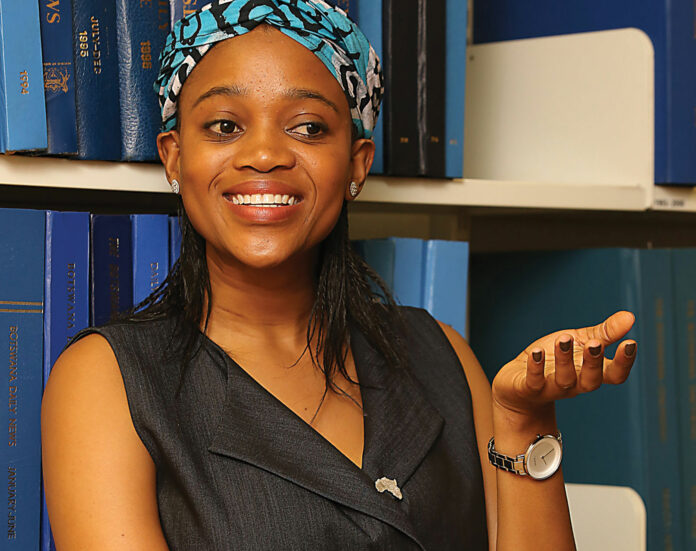
With the 2023 United Nations Climate Change Conference (CoP28) just three weeks away, Special Advisor and Africa Director for the UN Climate Change High-Level Champions, Bogolo Kenewendo, and the African Center for Economic Transformation (ACET) have released a policy brief outlining steps to lessen the “inefficiency, insufficiency, and unfairness” of the climate finance.
The policy brief’s release coincides with a lack of climate finance in countries such as Botswana and across the African continent, which have been disproportionately susceptible to climate change despite contributing the least to the problem.
“Many African countries find themselves choosing between financing projects for national SDG goals and financing projects for sustainability and climate action. At the core of this dilemma are constrained fiscal resources and national budgets. Further, these fiscal constraints aggravate the threat of climate change in Africa,” states part of the policy brief titled: Breaking Financing Barriers for a Just Climate Transition in Africa.
Botswana’s ministry of environment, natural resource conservation, and tourism previously recognised that access to climate funding is still “difficult,” despite “indications of growth in climate finance” globally. Furthermore, according to research conducted by the Institute for Security Studies (ISS), Botswana is one of the countries with insufficient resources to adapt.
However, the policy brief co-authored by Kenewendo, Dr. Mahmoud Mohieldin, UN Climate Change High-Level Champion, COP27, Egypt; and Reuben Wambui, Climate Risk and Finance Specialist and Founder of the Net-Zero Africa Initiative, suggests debt relief and suspension for low-and middle-income countries, including debt swaps.
“We propose the reduction and suspension of debt for low- and middle-income countries,” states the report, adding that “the project pipeline necessary to close the widening adaptation finance and implementation gaps is met with unfulfilled adaptation finance support promises….It is therefore imperative that climate transitions in Africa address, at their core, sustainable financing, a just energy transition, and closing the adaptation gap toward building long-term resilience.”
Meanwhile, former De Beers Botswana chief executive, Sheila Khama, argues there is need to pay close attention to the forces influencing climate politics. She expresses her thoughts at a time when European nations are growing more dependent on coal, while Botswana and the African continent is under pressure to provide clean energy and comply with stringent green measures.
She recently questioned EU’s sincerity in addressing climate change on X, formerly Twitter, following German Chancellor Olaf Scholz’s visit to Nigeria last week, during which he indicated that they are relying on natural gas supplies from Nigeria.
“With due respect Chancellor Scholz what is one supposed to make of your country & EU policy on clean energy & fossil fuels? Should we just agree that it is that the environment can wait?” said the former De Beers Botswana CEO, adding in another comment that “A reminder that when it comes to Europe’s energy security, the environment can wait.”
This year’s COP28 will be held in Dubai, United Arab Emirates (UAE) and runs from November 30 to December 12, 2023.

