

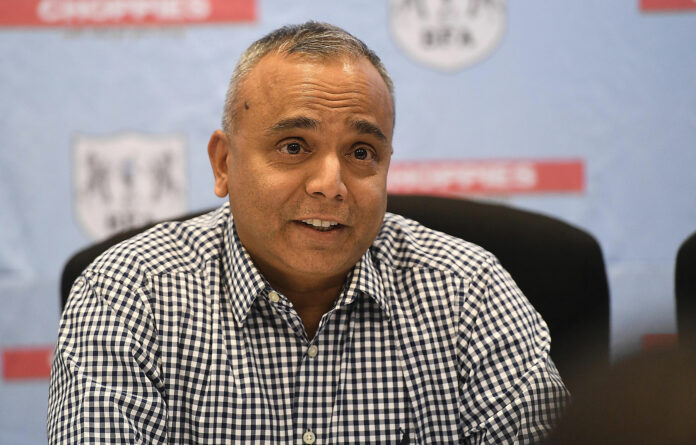
Forbes once described Ram as “Africa’s Indian Retail King”. This is because while the Choppies Enterprise story begins in Lobatse, that of its founding director and majority individual shareholder starts at Ollur town in India. Forbes describes Ollur, as a small town known for its entrepreneurial energy and commercial bustle hence it would not be far-fetched for one to think that Ollur inspired Ram to turn Wayside supermarket to a modern day Choppies. History books have it that upon his arrival in Botswana in 1992 Ram joined a local unit of the international accounting and auditing firm – Mazars. His first assignment at Mazars was handling the ailing finances of Wayside – a supermarket established by one of the Choppies founding directors – Farouk Ismail of the Chopdat family in Lobatse town some 60 kilometers south of Gaborone. The turnaround strategy saw Ram being appointed the company Chief Executive in 2000, a year after opening another store in the capital Gaborone which was also the first outside Lobatse. Some two years later, now under the Choppies brand, Ram and his team opened the first Hyper Store, still in Gaborone. The introduction of the Choppies stores, which at the time offered consumables at a price afforded by most low income households was regarded as ‘HIT’ for Ram. The arrival of Choppies was seen as a necessary competition to the South African retail brands including Shoprite and Spar who at the time controlled a large chunk of the market. To make another ‘HIT’, Ram did not just put up a country wide expansion strategy but also approached the Botswana Stock Exchange (BSE) to list the company in 2012. The listing of 1,174,207,583 ordinary shares made Choppies the second retail company in the local bourse after Sefalana Holdings. On its debut on the main board the grocer clocked 140 thebe translating into an increase of 25thebe from its IPO price of P1.15 after an oversubscription of 400 percent.
The Mogae factor – a hit or miss for Ram?
In October 2008 Choppies appointed Botswana’s third President – Festus Mogae, whose shares were amounting to 3.84 percent, as chairperson of the board. Commentators at the time described the move as a ‘smart’ one by Choppies founding directors. The expectation was that given that Mogae was a statesman, Choppies could get some favours from government. There was a mention of supply of groceries to the army, provision of security to some of the Choppies stores by state security agencies, quickly processed Visas and work permits for expatriate employees as well as mergers and acquisitions approvals, some of which were questionable. The appointment could generally be classified as a ‘win or hit’ for Ram and Choppies at the time but what then happened ten years thereafter (2018) could easily be seen as a ‘miss’. In 2018, Mogae who was still board chairman led a group of other shareholders that wanted Ram out, atleast from the position of Chief Executive. This was after the true extent of the Choppies financial mess was unravelled. The financials at the time not published were showing that the grocer’s Botswana based stores have buckled under pressure of supporting what appeared to be a costly expansion particularly outside the Botswana borders.
The Expansion Strategy, another ‘Ram miss’?
In 2015, the Botswana stores delivered P200 million in profit after tax (PAT) while South Africa brought in a P12 million loss, and Zimbabwe could only manage an P8.3 million. In the end, the group was able to save face with a P197.2 million profit, thanks to Botswana’s performance.
It was also in 2015 that Choppies ramped up its expansion, and the following year, Botswana operations were starting to feel the pressure, only growing its profit up to P203 million on the back of P68 million loss coming from South Africa, while Zimbabwe’s losses came at P12.3 million, and the rest of the region which included Kenya and Zambia furthering losses by P17.8 million. This resulted in the whole group’s profit for 2016 falling by 48 percent to P106 million.
By 2017, Ram’s expansion strategy was already proving to be a challenge as Choppies had its first cumulative loss of P169.8 million, fuelled by poor performance across its operations except the Botswana subsidiaries. The Botswana operations could only manage to rake in P141.5 million in profits but this was wiped away by the P252 million loss from South Africa, in conjunction with a P7.3 million loss in Zimbabwe, and the rest of the region (Kenya, Zambia, Tanzania and Mozambique) lost about P52 million.
In the wake of the 2018 P455 million loss which was mainly due from South Africa’s P273 million loss, and the rest of the region’s P148 million loss, Choppies board is exiting those markets.
Return to profitability – a certain hit? While Ram and by extension Choppies’s heavy association with political leaders became a fodder of controversy at some point, it was the realisation that the retailer’s wage gap amongst its subsidiaries could be discriminatory. For many the low salaries paid to Choppies Botswana store keepers, compared to their counterparts in other cross border subsidiaries felt like a betrayal for a country that sacrificed a lot in the past two decades. The low wages even ended in a picketing at one the stores in the capital Gaborone which was followed by dismal letters of those who participated in what Choppies regarded as ‘illegal strike’. With news that the majority citizen workers were underpaid, the nation was also reminded of how money that came from the expansion was used to favour foreigners in senior roles. Choppies management denied favouritism at the time. In 2019 Ram told one of the local radio station that Choppies has the ability to pay its store keepers ‘a little more’ but blamed the lack on the government’s prescribed minimum wage as well as the industry salaries which he said were initially set by retailers that operated before Choppies. A combination of the ‘discriminatory pay’, ‘expansion strategy gone-wrong’ and failure to publish the 2018 financial statements (which resulted in its securities suspended from both the BSE and JSE) exposed the sand castle that Ram’s ‘hits’ were built on. To ensure that the Choppies story that saw it grow from one store in Lobatse to a multibillion and multinational business does not end on a sour note, atleast for himself, Ram made yet another ‘hit’ by wrestling Choppies back from the Mogae led board which had suspended him and eventually got rid of it at an extra ordinary meeting in 2019. Ram and the new board then went on to appoint Mazars as the new auditors following a fall out with the top firms including PwC and KPMG.
But even the new auditors found a mess – when the delayed June 2018 financials were finally released in December 2019, the capital market got stunned by a P445 million loss (2018), and another shocking loss of P170 million (2017) which was initially reported as a P74.6 million profit when international auditor – KPMG did the retailer’s books. The losses extended to 2019, with retailer booking in a P428 million loss, and followed with a loss of P370.6 million for the year ended June 2020. In the ensuing drama, the Choppies CEO had no option but to quit and exit the loss-making markets – Kenya, South Africa, Mozambique and Tanzania. The focus then shifted to growing the company’s market share and profitability in the remaining 154 stores with signs of victory first recorded in 2020. In the financials for the year ended June 2021 the BSE quoted retailer reported a P60 million profit, marking the first time the retailer registered a full year profit since 2016.

