
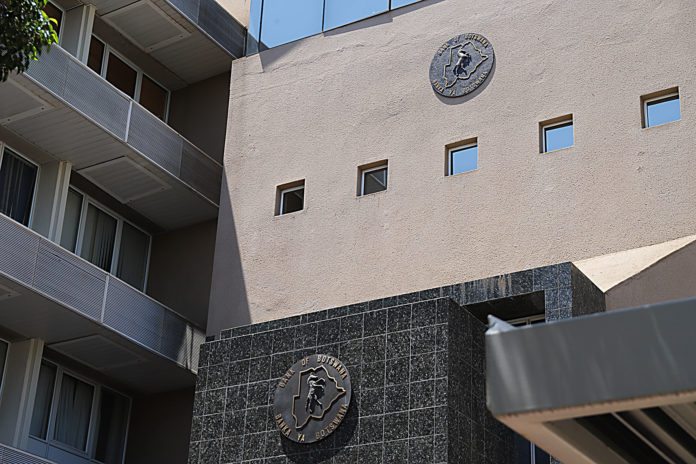
Bank of Botswana (BoB) has been named in a list of state-owned entities that have lapses in their corporate governance.
Botswana Accountancy Oversight Authority(BAOA) has observed poor corporate governance practices at the central bank.
BAOA report on examination of statutory bodies and state-owned enterprises, says BoB’s corporate governance practices are well below expected best international practice.
The report says the situation was exacerbated by the Bank’s governance structure which combines the roles of the Governor and Chairman of the Board.
“And worse of all, without any mitigation like a strong group of independent non-executive directors in its Board organized by a lead director, the Board does not appoint or participate in the appointment of new directors,” reads the report.
The report further states that the performance evaluation of the board that is appointed by the Minister was not done, adding that even the performance appraisal of the Governor was not done. “Perhaps the most important committee in an entity, the audit and risk committee was also not appropriately constituted. The Chief internal Auditor was not appointed in accordance with good corporate governance practices,” reads the report.
The report, which was presented before the Parliamentary Committee says despite all these weaknesses, the Bank’s defence was that “it was a creature of statute” and was therefore operating in compliance with the Bank of Botswana Act and its Bye Laws.
While this is true, BAOA says, since both these legislative instruments are more than twenty- four years old and should have long been reviewed considering abundant research on central bank governance done during the first decade of the 21st Century and the global preeminence of corporate governance codes in general during the same period.
“Without getting too deep into the governance structure of the Bank, the current situation can, definitely, not be addressed by a unitary board as this would never address the concerns that we have raised,” the report, signed by BAOA chief executive officer Duncan Majinda stated.
BAOA is of the view that BoB requires a two-tier board system or equivalent, comprising an oversight board and management board, with the oversight board chaired by an independent non- executive director and the management board chaired by the governor. It is believed that under this proposed structure, all sensitive matters specific to the central bank such as monetary stability and monetary operations; financial stability, and related issues could fall under the management board chaired by the Governor and given all the necessary accountabilities, responsibilities and transparency attached. Also in the report is that the rest of the governance areas comprising, amongst others, the management of the foreign reserves, human resources, information technology, finance and audit; risk management and the physical infrastructure and security could fall under the oversight board and be subjected to normal corporate governance requirements.
“This is critical under an environment where more than P50 billion of the country’s foreign reserves are managed by the Bank.
Also contained in the report is that currently, the Governor is not appraised either in his capacity as a Chairman of the board or chief executive officer, and no board evaluations were carried out.

